
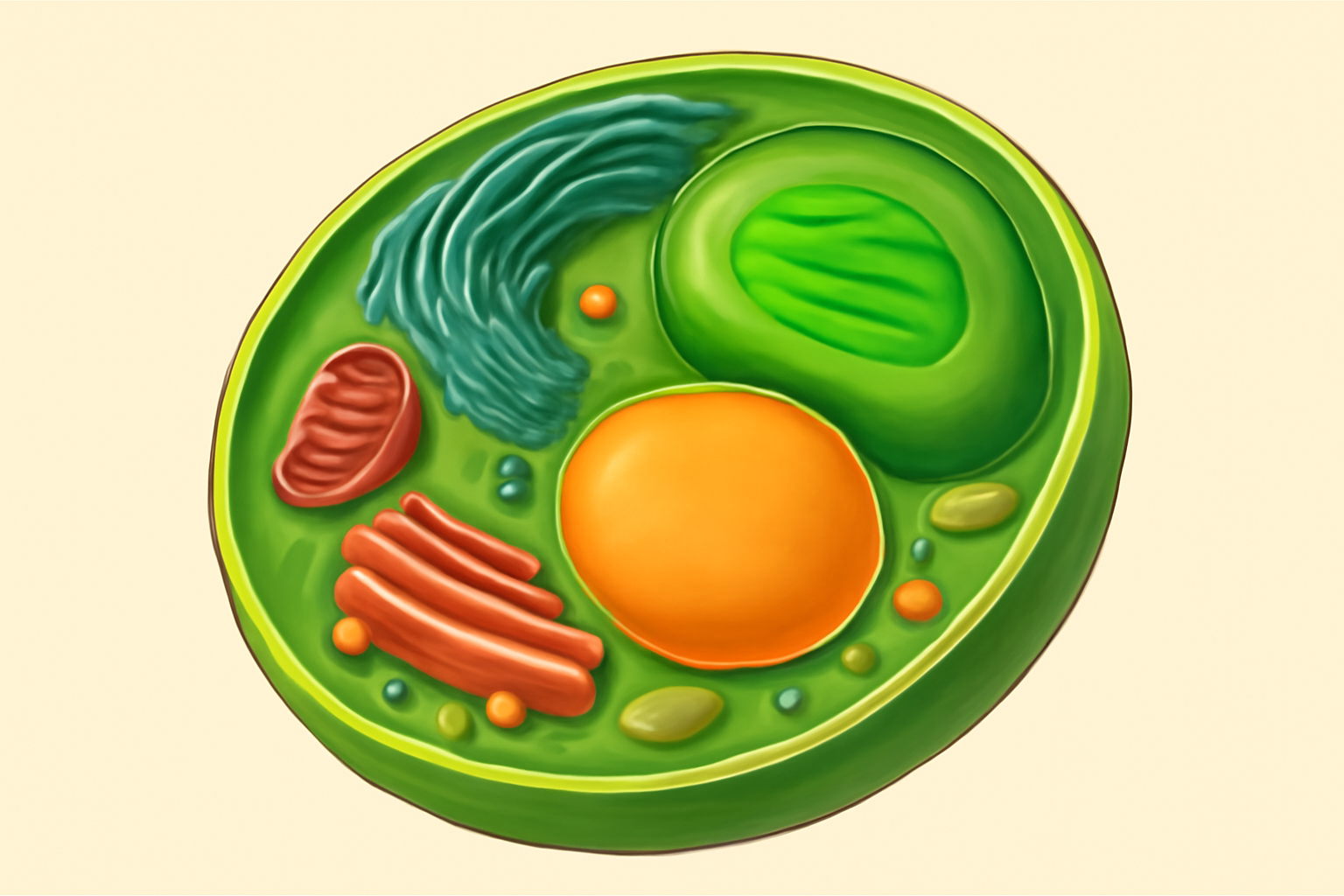
Class 11 Biology Chapter 8: Cell – The Unit of Life – 100 MCQs with Answers
1. Who first saw and named “cells” while observing a cork slice?
Answer: B) Robert Hooke
2. The smallest cell is:
Answer: A) Mycoplasma
3. The functional unit of life is:
Answer: B) Cell
4. The cell theory is not applicable to:
Answer: A) Virus
5. Which of these is a double membrane-bound organelle?
Answer: C) Mitochondria
6. Prokaryotic cells lack:
Answer: C) True nucleus
7. Pigment chlorophyll is present in:
Answer: A) Plastids
8. All eukaryotic cells have:
Answer: A) Nucleus
9. Cell wall of plant cell is mainly:
Answer: B) Cellulose
10. Which cell organelle is called the “powerhouse” of the cell?
Answer: C) Mitochondria
11. Ribosomes occur in:
Answer: D) All of these
12. The fluid mosaic model describes:
Answer: B) Plasma membrane
13. Plant cell differs from animal cell by presence of:
Answer: A) Plastids
14. The function of nucleolus is:
Answer: A) Ribosome synthesis
15. Plasmodesmata are:
Answer: B) Cytoplasmic connections
16. Centrosomes are concerned with:
Answer: B) Cell division
17. The ER with ribosomes on its surface is:
Answer: B) Rough ER
18. Prokaryotic DNA is:
Answer: B) Circular
19. The basic structural component of plasma membrane is:
Answer: A) Phospholipid
20. Outer covering of a prokaryotic cell is:
Answer: D) All of these
21. The sites of protein synthesis are:
Answer: B) Ribosomes
22. Golgi apparatus is absent in:
Answer: B) Blue-green algae
23. The largest organelle in mature plant cell is:
Answer: B) Vacuole
24. Peroxisomes are concerned with:
Answer: C) Lipid breakdown
25. The living content of the cell is:
Answer: A) Protoplasm
26. Cell wall of fungi is made of:
Answer: B) Chitin
27. Mitochondria and chloroplasts have:
Answer: B) Double membrane
28. Lysosome contains:
Answer: C) Hydrolytic enzymes
29. The main function of plasma membrane is:
Answer: B) Control material exchange
30. The nucleoid region in prokaryotes is:
Answer: B) DNA-rich area
31. Which organelle is called “suicide bag” of the cell?
Answer: C) Lysosome
32. The smallest organelle is:
Answer: B) Ribosome
33. The site of photosynthesis is:
Answer: B) Chloroplast
34. Which of the following is not correct for prokaryotes?
Answer: A) True nucleus present
35. DNA is present in:
Answer: D) All of these
36. The cell wall is found in:
Answer: A) Plant cells
37. The main chemical in bacterial cell wall is:
Answer: C) Peptidoglycan
38. Darkly stained nucleolus is a site for:
Answer: B) Ribosome formation
39. The basic structural and functional unit of living beings is:
Answer: B) Cell
40. Which of the following is not a plastid?
Answer: B) Mitochondria
41. The cell organelle which helps in cell division in animal cell:
Answer: C) Centriole
42. The middle lamella is mainly composed of:
Answer: B) Pectin
43. Prokaryotic ribosomes are:
Answer: A) 70S
44. Centrioles are absent in most:
Answer: B) Plant cells
45. The sites of lipid synthesis in cell are:
Answer: A) Smooth ER
46. The cell membrane is chemically composed of:
Answer: B) Phospholipid and protein
47. Site of glycoprotein formation:
Answer: C) Golgi apparatus
48. The main function of cell wall is:
Answer: A) Provide shape
49. The unit membrane concept was given by:
Answer: B) Robertson
50. 80S ribosomes are found in:
Answer: D) All eukaryotic cells
51. Cell sap is found in:
Answer: C) Vacuole
52. Which cell structure controls the passage of substances in and out of the cell?
Answer: C) Plasma membrane
53. Chromosomes are made of:
Answer: D) DNA and protein
54. In prokaryotes, the genetic material is:
Answer: B) Circular DNA
55. Plant vacuole is surrounded by:
Answer: A) Tonoplast
56. The main storage form of carbohydrate in plant cell is:
Answer: B) Starch
57. Which is not a part of endomembrane system?
Answer: C) Mitochondria
58. Chloroplast contains:
Answer: D) All of these
59. The main pigment in chromoplast is:
Answer: B) Carotenoids
60. The longest cell in human body is:
Answer: D) Nerve cell
61. Nucleoid is the:
Answer: C) Region with DNA in prokaryote
62. Mitochondria and chloroplasts are similar because:
Answer: D) All of these
63. Main function of plant vacuole:
Answer: A) Storage
64. The envelope in nucleus is:
Answer: B) Double layered
65. Smallest prokaryotic organism:
Answer: B) Mycoplasma
66. Plasmodesmata help in:
Answer: B) Intercellular transport
67. Origin of mitochondria is:
Answer: A) Endosymbiotic theory
68. Bacterial flagella is made of:
Answer: B) Flagellin
69. Mitochondrial matrix contains:
Answer: D) All of these
70. Site of photosynthesis:
Answer: C) Chloroplast
71. Which does not have a membrane?
Answer: B) Ribosome
72. The main function of endoplasmic reticulum is:
Answer: A) Protein and lipid synthesis
73. The site of glycosylation is:
Answer: C) Golgi apparatus
74. Tonoplast is associated with:
Answer: B) Vacuole
75. Annuli are found in the wall of:
Answer: B) Tracheid
76. Steroid synthesis occurs in:
Answer: B) Smooth ER
77. Mesosomes are seen in:
Answer: A) Prokaryotes
78. Basal body of cilia is:
Answer: B) Centriole
79. Site of translation:
Answer: A) Ribosome
80. The cell was first discovered by:
Answer: D) Robert Hooke
81. The unit of measurement of cell is:
Answer: C) Micron
82. Polyribosome is:
Answer: B) mRNA chain with ribosomes
83. Cristae occur in:
Answer: B) Mitochondria
84. Bacterial DNA is:
Answer: B) Circular
85. Middle lamella made of:
Answer: B) Pectin
86. Cell wall of plant is absent in:
Answer: A) Animal cell
87. Matrix of mitochondria contains:
Answer: D) All of these
88. Plasmid is found in:
Answer: C) Bacteria
89. 70S ribosomes are found in:
Answer: D) All of these
90. The hydrophilic end of phospholipid faces:
Answer: C) Both outside and inside
91. Ribosomes were discovered by:
Answer: A) Palade
92. Nuclear pores regulate:
Answer: C) Transport in and out of nucleus
93. Double membrane is not found in:
Answer: D) Ribosome
94. Cell organelles containing their own DNA are:
Answer: A) Nucleus, mitochondria, chloroplast
95. Plasma membrane proteins act as:
Answer: D) All of these
96. In plant cell, the largest part is:
Answer: C) Vacuole
97. Primary function of plastid is:
Answer: D) All of these
98. RNA is mainly present in:
Answer: A) Ribosome
99. Ribosomes attached to ER are involved in:
Answer: A) Protein synthesis
100. The number of chromosomes in human body cells is:
Answer: B) 46