
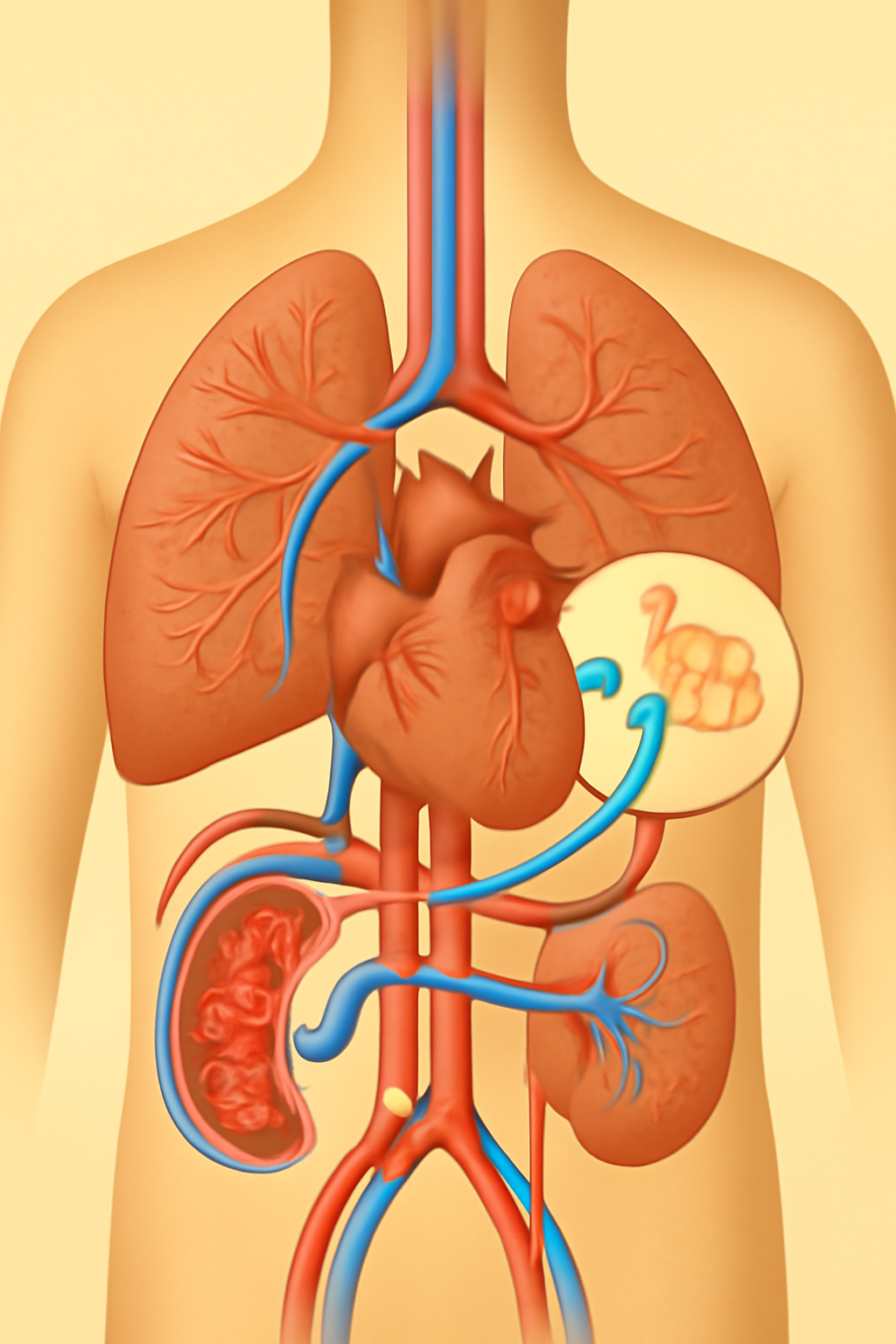
Class 11 Biology Chapter 18: Body Fluids and Circulation – 100 MCQs with Answers
1. The largest human blood vessel is:
Answer: C) Aorta
2. Which blood cells are involved in immunity?
Answer: C) WBC
3. The dissolved proteins in plasma are:
Answer: D) All of these
4. Average adult human heart rate per minute:
Answer: B) 72
5. The pacemaker of the heart is:
Answer: C) SAN
6. Lymph differs from blood in not having:
Answer: B) RBC
7. Which valve guards the opening between left atrium and left ventricle?
Answer: C) Bicuspid
8. Volume of blood pumped out by each ventricle per beat is:
Answer: B) Stroke volume
9. The process of blood cell formation is:
Answer: B) Hemopoiesis
10. Which blood group is universal donor?
Answer: D) O
11. Heartbeat is initiated and regulated by:
Answer: A) SA node
12. Highest blood pressure in systemic circulation is found in:
Answer: A) Aorta
13. Which valve prevents backflow from right ventricle to right atrium?
Answer: B) Tricuspid
14. The process of blood clotting is called:
Answer: C) Coagulation
15. Lifespan of human RBC is:
Answer: B) 120 days
16. The only vein that carries oxygenated blood:
Answer: A) Pulmonary vein
17. Which layer of artery is muscle layer?
Answer: B) Tunica media
18. Systolic pressure for normal healthy adult (mm Hg) is:
Answer: C) 120
19. Blood group determined by:
Answer: A) Antigen on RBC
20. Blood vessel connecting gut and liver is:
Answer: C) Hepatic portal vein
21. The main site for synthesis of clotting factors:
Answer: A) Liver
22. Number of chambers in human heart:
Answer: C) 4
23. Normal pH of blood is:
Answer: B) 7.4
24. The protein forming mesh in blood clot is:
Answer: A) Fibrin
25. Largest amount of carbon dioxide is carried as:
Answer: C) Bicarbonate
26. The chamber of heart with thickest wall:
Answer: C) Left ventricle
27. Shape of human RBC is:
Answer: B) Biconcave
28. Immature RBC in blood is called:
Answer: B) Reticulocyte
29. The component of blood that helps in clotting:
Answer: C) Platelet
30. The color of oxygenated blood is:
Answer: C) Red
31. The normal count of WBC per mm3 of blood:
Answer: A) 4,000–11,000
32. Which chamber of heart receives oxygenated blood from lungs?
Answer: A) Left atrium
33. Rh factor was discovered in:
Answer: A) Monkeys
34. Heart sounds ‘lub’ and ‘dup’ are produced due to:
Answer: B) Closure of valves
35. The pulmonary artery carries:
Answer: B) Deoxygenated blood
36. The largest lymphatic organ in the human body is:
Answer: B) Spleen
37. The valve between right atrium and right ventricle is:
Answer: C) Tricuspid
38. The blood vessel entering the right atrium is:
Answer: C) Superior vena cava
39. The number of pulmonary veins opening into left atrium:
Answer: C) 4
40. The bundle of His is found in:
Answer: B) Interventricular septum
41. The duct that drains lymph into blood is:
Answer: A) Thoracic duct
42. Cardiac muscle is:
Answer: A) Striated and involuntary
43. The smallest blood vessels are:
Answer: C) Capillaries
44. The T wave of ECG corresponds to:
Answer: B) Repolarization of ventricle
45. Pulse is felt at:
Answer: A) Artery
46. Which formed element has no nucleus?
Answer: C) Erythrocytes
47. The function of pericardium is:
Answer: A) Protect heart
48. What type of circulation is seen in man?
Answer: B) Closed
49. The erythropoietin hormone is secreted by:
Answer: B) Kidney
50. Which of the following plays role in immunity?
Answer: C) WBC
51. Life span of human platelet is:
Answer: C) 10 days
52. Which part of heart receives deoxygenated blood?
Answer: B) Right atrium
53. Nodal tissue between atria and ventricles:
Answer: B) AVN
54. Atrial contraction is initiated by:
Answer: C) SAN
55. Chordae tendinae are found in:
Answer: B) Cuspid valves
56. Which chamber has maximum oxygen?
Answer: B) Left atrium
57. The average volume of blood in adult male is:
Answer: C) 5-6L
58. The lymphatic fluid is called:
Answer: C) Lymph
59. Pulmonary circulation carries blood from:
Answer: C) Heart to lungs and back
60. Universal recipient blood group:
Answer: A) AB
61. Which cell has lobulated nucleus?
Answer: C) Neutrophil
62. Primary function of lymph node:
Answer: C) Immunity
63. Site of erythropoiesis in fetus:
Answer: A) Liver
64. Most abundant plasma protein is:
Answer: A) Albumin
65. Lymph differs from plasma in having:
Answer: A) Less protein
66. Which granulocyte is most abundant?
Answer: C) Neutrophil
67. Cardiac output per minute (average adult):
Answer: B) 5L
68. The main function of heart valves:
Answer: B) Preventing backflow
69. Blood pressure is measured by:
Answer: C) Sphygmomanometer
70. Pericardial fluid’s purpose:
Answer: B) Lubrication
71. Anti-coagulant present in blood is:
Answer: B) Heparin
72. Non-nucleated formed element:
Answer: B) RBC
73. Which blood cell is phagocytic?
Answer: C) Neutrophil
74. Who discovered blood groups?
Answer: B) Karl Landsteiner
75. Heart is enclosed in:
Answer: A) Pericardium
76. Which cell plays a role in allergic response?
Answer: A) Basophil
77. Which blood vessel brings blood to glomerulus?
Answer: B) Afferent arteriole
78. T lymphocytes mature in:
Answer: C) Thymus
79. “Dub” sound is produced by closure of:
Answer: B) Semilunar valves
80. The largest artery in the body:
Answer: C) Aorta
81. Normal diastolic pressure in adult (mm Hg) is:
Answer: B) 80
82. The force driving blood through vessels is:
Answer: B) Blood pressure
83. The Purkinje fibers are present in:
Answer: B) Ventricles
84. Capillaries are absent in:
Answer: C) Cornea
85. Which cell releases histamine?
Answer: B) Basophil
86. Most oxygen is transported by:
Answer: B) Haemoglobin
87. The fraction of blood left after removal of formed elements is:
Answer: A) Plasma
88. The bicuspid valve is also called:
Answer: B) Mitral
89. Eosinophil is increased in:
Answer: A) Allergy
90. Thrombocytes are:
Answer: C) Platelets
91. The main buffer system of blood is:
Answer: C) Bicarbonate
92. Platelets are formed from:
Answer: A) Megakaryocytes
93. Which part of heart initiates heartbeat?
Answer: C) SAN
94. Silent chamber of heart is:
Answer: B) Right atrium
95. The heart beat is initiated by:
Answer: C) SA node
96. Normal pulse rate per minute is:
Answer: C) 72
97. Heart block is a defect of:
Answer: D) AV node
98. Which is not a granulocyte?
Answer: A) Monocyte
99. Which protein is NOT present in blood plasma?
Answer: B) Myosin
100. The term ‘hematology’ refers to:
Answer: D) Study of blood